How to Make Evidence-Informed Decisions About Eye Care
An Optometrist helps patients answer several distinct questions: how clearly they see, whether their eyes are functioning together, whether disease or injury may be present, and what action is appropriate next.
These questions are related, but they are not interchangeable. Passing a vision screening does not prove that every part of the eye is healthy. A normal pressure reading does not rule out glaucoma. that every part of the eye is healthy. A Clear distance vision does not necessarily exclude focusing difficulties, binocular vision problems, or early disease.
Understanding what different tests can and cannot establish helps patients interpret results accurately and participate more effectively in their care.
Begin With the Question the Examination Needs to Answer
An eye-care visit should be guided by the patient’s symptoms, health history, age, visual demands, and risk factors. Someone seeking an updated glasses prescription presents a different clinical question from a person experiencing flashes of light or monitoring diabetes-related eye changes.
Before the examination, patients should identify where vision is not meeting their needs. Useful details include whether the problem affects distance, reading, computer work, night driving, depth perception, or one eye more than the other.
It is also important to report:
- When the change began and whether it was sudden or gradual
- Current medications and diagnosed medical conditions
- Previous eye injuries, infections, procedures, or treatments
- Family histories of glaucoma, retinal disease, or serious vision loss
- Contact lens habits, including sleeping, swimming, and replacement practices
- Headaches, double vision, light sensitivity, pain, redness, or new floaters
This information changes how findings are interpreted. The same measurement may have different significance in a healthy young adult, a patient with diabetes, and someone with a strong family history of glaucoma.
Screening Is Not the Same as Diagnosis
A screening test is designed to identify people who may need further evaluation. It generally answers a narrow question and may be performed at a school, workplace, primary-care office, or community event. A comprehensive examination combines history, multiple measurements, direct observation, and professional judgment.
The distinction is particularly important in glaucoma care. The National Eye Institute’s statement on glaucoma detection explains that tonometry, which measures pressure inside the eye, is not sufficient by itself for an accurate diagnosis. Some people with glaucoma do not have elevated pressure, while others have elevated pressure without glaucomatous damage.
A glaucoma evaluation may therefore consider several forms of evidence, including eye pressure, optic nerve appearance, peripheral vision, corneal thickness, retinal nerve fiber measurements, and changes over time.
What an inconclusive recommendation actually means
The U.S. Preventive Services Task Force has concluded that evidence is insufficient to determine the balance of benefits and harms of primary-care glaucoma screening for asymptomatic adults age 40 and older. This is neither a recommendation for nor against screening.
It also does not mean that glaucoma examinations are ineffective or that people with symptoms should wait. The recommendation addresses a defined population and a particular preventive screening question. The task force specifically notes that clinicians should individualize decisions and that its statement does not apply to adults reporting signs or symptoms of vision loss.
This is a useful lesson in reading health guidance: always check the population, intervention, outcome, and limits addressed by the recommendation.
Examination Timing Should Reflect Risk
There is no single examination interval that fits every patient. The National Eye Institute’s dilated eye exam guidance states that frequency depends on a person’s risk for eye disease.
Factors that may influence timing include:
- Age and changes in visual function
- Diabetes, high blood pressure, and other health conditions
- A family history of glaucoma or inherited eye disease
- Previous abnormal findings or eye surgery
- Use of medications that can affect the eyes
- Contact lens wear
- New symptoms, injury, or occupational exposure
A calendar reminder can support preventive care, but it should not override clinical judgment. New symptoms may justify an earlier evaluation, while follow-up for an identified condition may occur on a schedule designed specifically for that finding.
Individual Tests Become More Useful When Combined
Patients sometimes focus on whether they achieved “20/20” vision. Visual acuity is valuable, but it measures clarity under defined testing conditions. It does not describe every aspect of visual performance or eye health.
A comprehensive evaluation may include:
- Visual acuity testing to measure clarity at selected distances
- Refraction to determine whether lenses can improve vision
- Pupil and eye movement testing to assess neurological responses and coordination
- Binocular vision testing to evaluate how the eyes work together
- Slit-lamp examination to inspect external and anterior eye structures
- Tonometry to measure intraocular pressure
- Dilated examination or retinal imaging to evaluate internal structures
- Additional testing when symptoms or initial findings justify it
No test should be interpreted in isolation from its purpose. Retinal photographs, for example, can create a valuable record for comparison, but the clinical meaning depends on image quality, the structures captured, other findings, and the patient’s history.
Children Require Developmental Context
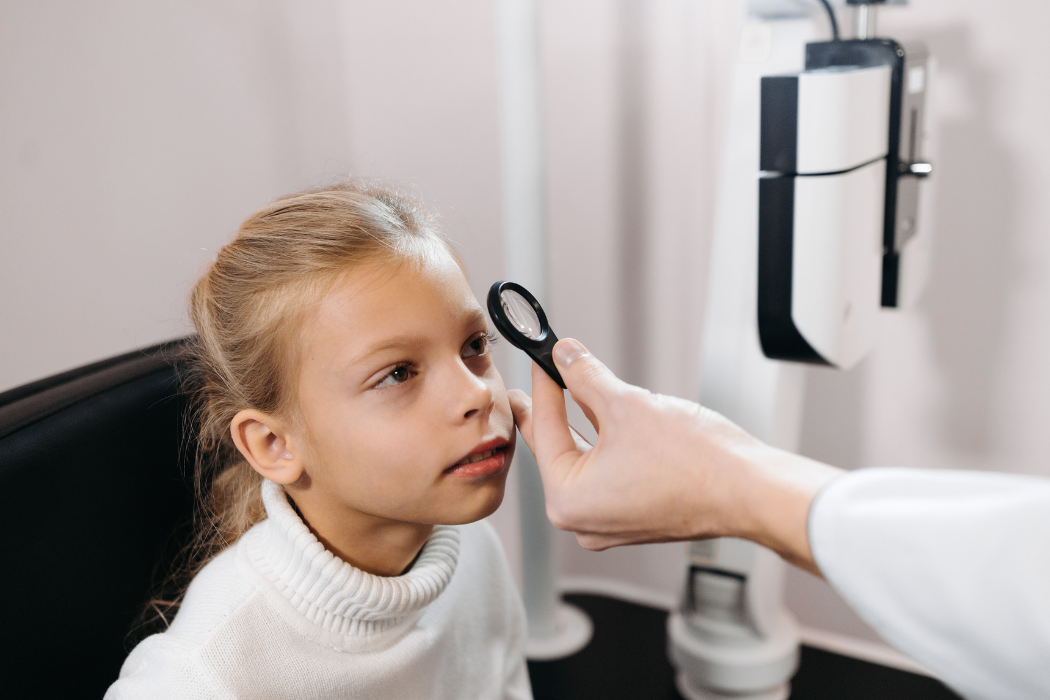
Children may not recognize blur or know how to describe what they see. They may assume everyone experiences vision the same way they do. This makes observation, age-appropriate testing, and follow-through especially important.
The American Academy of Pediatrics explains through its childhood vision-screening guidance that screening begins early and that children who do not pass should receive a full evaluation from an eye doctor experienced in pediatric care.
Screening is valuable, but it has limits. A child may need further evaluation because of an abnormal result, an eye turn, unusual head positioning, persistent squinting, difficulty tracking, a strong family history, or concerns from a parent or teacher.
Timely follow-up matters because visual development occurs during childhood. The National Eye Institute’s amblyopia overview explains that amblyopia develops when the brain learns to rely more heavily on one eye. Early detection and treatment can help prevent lasting reduction in vision.
Contact Lens Safety Depends on Behavior
A contact lens prescription involves more than lens power. The fit, material, design, replacement schedule, tear film, and condition of the eye’s surface all influence safety and performance.
The Centers for Disease Control and Prevention recommends washing and drying hands before handling lenses, keeping lenses away from water, using fresh disinfecting solution, replacing cases regularly, and avoiding sleep in lenses unless specifically directed by an eye-care provider.
Contact lens wearers should keep current glasses available and remove their lenses if they develop pain, redness, discharge, light sensitivity, or a change in vision. Continuing to wear a lens through significant discomfort can delay recognition of infection or injury.
Some Symptoms Change the Priority Immediately
Evidence-informed care includes knowing when routine scheduling is inappropriate. Sudden vision loss, chemical exposure, penetrating injury, severe pain, or a rapidly developing shadow in the visual field may require urgent or emergency attention.
The National Eye Institute identifies sudden new floaters, flashes of light, and a curtain-like shadow as warning signs of retinal detachment. Because treatment delays can increase the risk of permanent vision loss, these symptoms require immediate professional evaluation.
When contacting an office, patients should state the symptom first, explain when it began, identify which eye is affected, and mention any injury or contact lens use. This helps the clinical team determine an appropriate response.
Eye Findings Should Be Connected With General Health
Diabetes demonstrates why eye care should not operate separately from the rest of healthcare. According to the CDC’s guidance on diabetes and vision loss, high blood sugar can damage retinal blood vessels, and early diabetic retinopathy may not produce noticeable symptoms.
Patients can improve continuity by sharing relevant eye findings with their primary-care clinician and bringing updated medication and health information to eye examinations. When an eye-care provider recommends referral, monitoring, or communication with another professional, the purpose should be explained clearly.
Prevention Also Happens Outside the Clinic
Eye-health evidence should lead to practical action. One of the clearest examples is protective eyewear. The National Institute for Occupational Safety and Health recommends matching protection to the specific hazard while considering coverage, comfort, peripheral vision, and other equipment.
Safety glasses, goggles, and face shields are not interchangeable. The appropriate choice depends on whether the hazard involves impact, flying particles, chemicals, heat, or infectious material. People who need prescription correction should ask about options that provide both clear vision and suitable protection.
Applying These Principles in Mogadore
Mogadore Eye Care is an independent, locally owned Ohio practice led by Shannon Honeycutt, O.D. Its published services include comprehensive eye examinations, pediatric eye care, contact lens evaluations, care for many common eye emergencies, and assistance with glasses and contact lenses.
The practice states that pediatric examinations use age-appropriate pictures, toys, and visual activities, so children do not need to know letters or complete an adult-style refraction. Its contact lens evaluations consider lens modality, material, design, care systems, lifestyle, eye shape, and ocular health. When surgery may be necessary, the practice refers patients for a surgical consultation.
This scope illustrates an important feature of community eye care. The value is not merely producing measurements. It is connecting those measurements with the patient’s history, explaining uncertainty, recognizing urgency, and selecting a reasonable next step.
Questions That Improve an Eye-Care Visit
Patients can make clinical information more useful by asking:
- What question was this test intended to answer?
- Was the result normal, abnormal, or simply worth monitoring?
- How does it compare with my previous findings?
- Which personal risk factors affect the recommendation?
- What symptoms should prompt me to call sooner?
- When should the test or examination be repeated, and why?
Evidence-based care is not a collection of isolated numbers. It is a structured process that combines research, examination findings, clinical expertise, and the patient’s circumstances. When patients understand that process, they are better prepared to make informed decisions and protect their vision over time.