Why a Contact Lens Prescription Is More Than a Lens Power
Why a Contact Lens Prescription Is More Than a Lens Power Effective contact lens exams determine not only what optical correction is needed, but also…


An Optician helps turn a clinical prescription into eyewear that is correctly measured, appropriately fitted, and suitable for the wearer’s daily visual demands.
Choosing glasses can appear straightforward until the discussion expands to progressive designs, high-index materials, coatings, digital-device features, polarization, and custom tints. Each option may sound beneficial, but not every feature is equally useful for every person.
A research-informed approach begins with a simple question: What specific problem is this recommendation intended to solve?
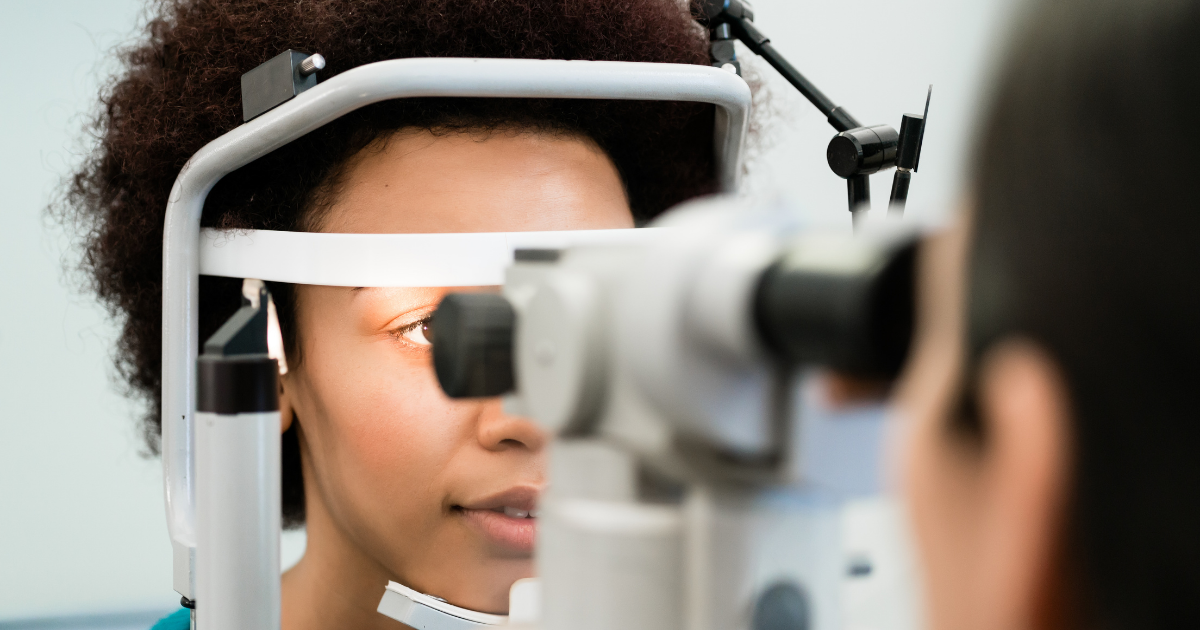
An eye doctor examines the eyes, evaluates eye health, and writes the prescription. The optician works with that prescription to help select frames and lenses, take measurements, prepare laboratory instructions, and adjust the completed eyewear.
The U.S. Bureau of Labor Statistics describes opticians as professionals who measure customers’ eyes and faces, recommend frames and lens treatments, create laboratory work orders, and adjust or repair eyewear.
These responsibilities matter because a prescription alone does not specify every detail needed to produce comfortable glasses. The finished result is influenced by the frame, lens design, measurements, fabrication, and final adjustment.
Eyeglasses correct refractive errors by changing how light focuses on the retina. According to the National Eye Institute, single-vision lenses correct one viewing range, while multifocal lenses can provide correction for near and distance vision.
New glasses should not be treated as a substitute for an appropriate eye examination. Blurry vision, headaches, glare, or difficulty focusing may relate to the prescription, but these symptoms can also have other causes.
The National Eye Institute’s guidance on dilated examinations explains that many eye diseases have no early warning signs. The appropriate examination schedule depends on age, health, family history, and individual risk factors.
Before choosing lenses, tell the eye doctor about changes such as:
Sudden or severe symptoms require prompt clinical attention, not simply a new pair of glasses.
The most advanced lens is not automatically the most appropriate one. A useful recommendation should reflect the distances, environments, and activities that occupy the wearer’s day.
Single-vision lenses provide one prescribed power across the lens. They may be used for distance, reading, or another specific working range. Some people use separate pairs for different activities because each pair provides a broad viewing area for its intended task.
Bifocals provide distinct distance and near zones. Progressive lenses change power gradually from the upper to the lower portion of the lens, allowing access to distance, intermediate, and near vision without a visible dividing line.
Progressives can be convenient, but they require accurate positioning and realistic expectations. The usable zones vary by design, prescription, frame, and working distance. Someone who spends hours using multiple monitors may benefit from a different solution than someone who primarily drives and reads printed material.
Task-specific designs may support extended desk work or provide limited near assistance. Before purchasing one, measure the distance from your eyes to your main screen and describe how frequently you shift among a phone, laptop, monitor, paperwork, and people across the room.
Frame choice affects more than appearance. Size, shape, bridge design, lens depth, and the position of the frame can influence comfort, lens thickness, weight, and access to different viewing zones.
A strong prescription may appear thicker in a large frame than in a smaller, well-centered design. A shallow frame may provide insufficient vertical space for a particular multifocal design. A poorly fitting bridge may also cause the glasses to slide, changing where the wearer looks through the lenses.
Evaluate a frame by checking whether it:
The frame should normally be adjusted before final measurements are taken. Measuring an unstable frame can preserve the wrong position in the finished lenses.
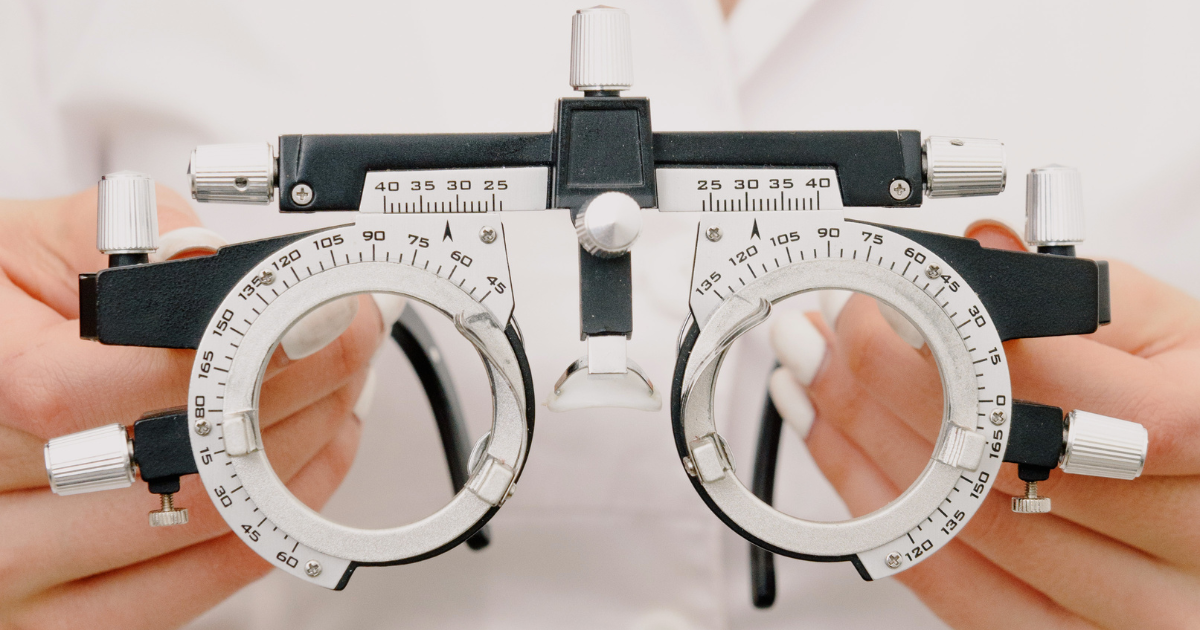
Pupillary distance identifies the horizontal relationship between the eyes and lenses. Multifocal eyewear may also require fitting heights and other positioning information.
These measurements help place the intended optical zones in relation to the wearer’s pupils and the selected frame. Even digitally produced lenses depend on accurate input. Sophisticated manufacturing cannot compensate for incorrect measurements or a frame that sits differently after delivery.
When collecting completed glasses, check vision at the distances relevant to you. Walk carefully, read ordinary text, look across the room, and test a screen when practical. If the frame slides or one lens appears clearer than the other, ask for an assessment rather than assuming discomfort must simply be tolerated.
Lens options are often sold as a package, but each feature should have a defined purpose.
Blue-light filtering deserves particular scrutiny because marketing claims can extend beyond the supporting evidence. A Cochrane review of 17 randomized trials found that blue-light filtering spectacle lenses may not reduce short-term computer-related eye strain compared with lenses that do not include the filter. Evidence regarding sleep and several other outcomes remained inconclusive.
For screen discomfort, the American Academy of Ophthalmology recommends addressing factors such as prolonged viewing, reduced blinking, glare, viewing distance, and uncorrected vision. A lens feature may still be chosen for personal preference, but it should not be presented as a universal solution.
Dark lenses do not necessarily provide adequate ultraviolet protection. The American Academy of Ophthalmology recommends sunglasses that block 99 to 100 percent of UVA and UVB radiation.
Polarization reduces reflected glare but does not, by itself, establish UV protection. Ask about both features separately. People who need vision correction can consider prescription sunglasses, photochromic lenses, or compatible sun clips based on how they drive, work, and spend time outdoors.
Impact-resistant lens material and certified protective eyewear are not interchangeable concepts. Everyday frames may lack the coverage, side protection, construction, or markings required for a hazardous workplace.
The Occupational Safety and Health Administration requires suitable eye protection for hazards such as flying particles, chemicals, and injurious light. Workers who need prescription correction must use protection that incorporates the prescription or fits over their corrective lenses without disturbing either pair.
Tell the optician when eyewear is intended for industrial work, laboratory use, construction, woodworking, or another hazardous activity. The correct solution should be selected according to the actual exposure and applicable workplace requirements.
Consumers benefit from knowing the details of their eyewear. Keep a copy of the prescription and request documentation of the frame, lens material, design, coatings, tint, warranties, and expected completion time.
The Federal Trade Commission’s Eyeglass Rule requires optometrists and ophthalmologists to provide patients with a copy of their prescription after an eye examination at no additional cost. The prescription cannot be withheld because the patient chooses to purchase eyewear elsewhere.
When comparing prices, confirm that the quotations cover equivalent products. Two progressive lenses or anti-reflective coatings may differ in design, customization, warranty, and included follow-up service.
Urban Eyecare is a Phoenix-owned practice with downtown and uptown locations. Its published optical services include one-to-one eyewear styling, independent designer frames, customized lenses, prescription lens replacement, and an on-site optical laboratory.
The practice lists single-vision, anti-fatigue, bifocal, and progressive options, along with several lens materials and customizations such as anti-reflective coatings, polarization, photochromic treatments, sun tints, mirrors, and custom clips.
This range illustrates why a consultation should begin with the prescription and lifestyle rather than a predetermined product. Frame design, material, lens category, and customization should function as one coordinated system. Customers should confirm current availability, suitability, turnaround time, warranties, and pricing directly with the practice.
Prescription eyewear works best when clinical findings, precise measurements, thoughtful frame selection, appropriate lens design, and careful adjustment support one another.
Research can identify which claims have credible support, while a skilled professional applies that information to the individual wearer. The goal is not to purchase every available feature. It is to create eyewear that performs reliably in the situations where clear, comfortable vision matters most.