How to Build a Blonde Plan That Respects the Starting Point
How to Build a Blonde Plan That Respects the Starting Point Blonde hair services work best when the desired shade is treated as one part…

Blonde hair services work best when the desired shade is treated as one part of a larger plan involving placement, starting color, hair history, condition, maintenance, and safety.
Blonde is not a single technical result. Two people may save the same inspiration photo while wanting very different things: brightness around the face, less contrast at the roots, cooler ends, more visible dimension, or an overall lighter effect. Their starting points may also require different methods and timelines.
A well-designed plan connects the visual goal to evidence gathered before and during the service. That process makes expectations clearer and helps protect the qualities that matter after the color is complete, including strength, softness, movement, and manageability.
Words such as beige, icy, golden, dimensional, lived-in, and bright can be useful, but people do not always interpret them the same way. A stronger consultation converts those descriptions into features that can be seen and discussed.
Before choosing a technique, clarify:
Several reference photos are more informative than one. A guest can identify the placement they like in one image, the tone in another, and the amount of contrast in a third. The stylist can then explain which elements are compatible with the guest’s natural color and present condition.
Natural depth is only one part of the baseline. Previous permanent color, lightener, smoothing services, heat habits, home color, and environmental buildup may affect how different sections respond. Even when the hair appears visually uniform, the roots, middle lengths, and ends may have different chemical histories.
A review in the International Journal of Trichology explains that bleaching oxidizes natural pigment and can affect the hair fiber. This is why lightening is not simply a matter of applying a pale color over a darker one. The existing pigment must be altered, and the method used to reach the target matters.
Guests can improve the initial assessment by sharing a complete history, including services performed elsewhere. Useful details include:
An incomplete history can make the hair look more predictable than it is. Accurate information gives the stylist a better basis for deciding whether the goal is suitable for one visit or should be approached in stages.
Technique names are helpful only when they describe the distribution of lightness the guest actually wants. A partial highlight, full highlight, lowlight combination, and balayage do not create the same pattern or grow-out experience.
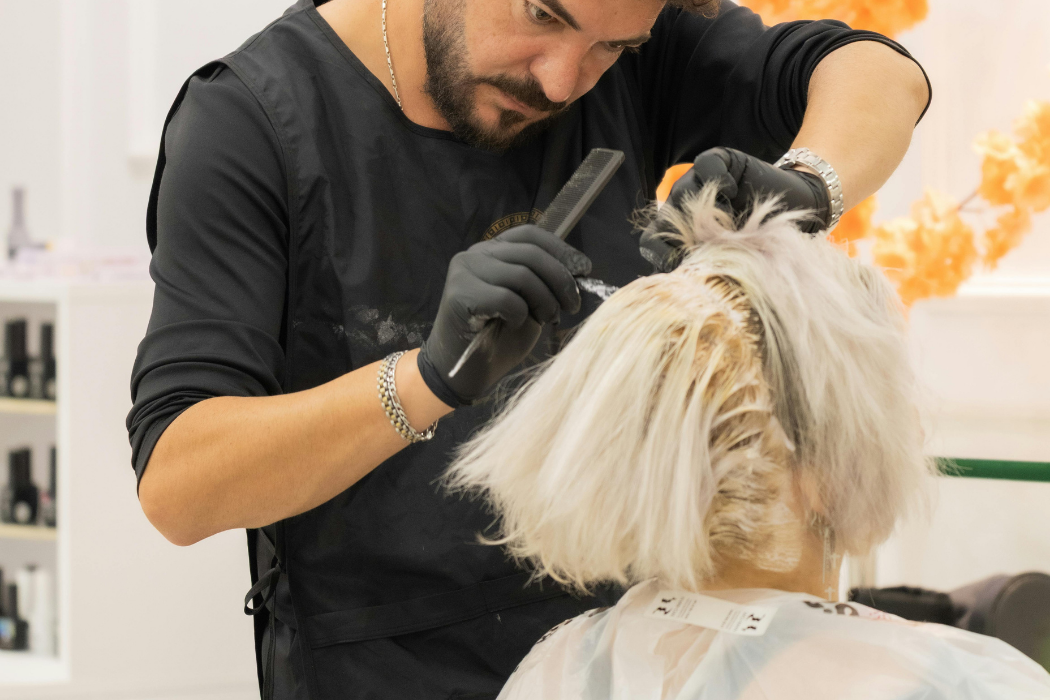
A partial service can concentrate brightness in visible areas, often around the front and upper sections. It may suit someone who wants a noticeable refresh without changing every area of the hair. However, it will not necessarily produce the uniformly lighter effect associated with foils placed throughout the head.
Combining lighter and darker pieces can preserve or reintroduce depth. This can make movement more visible and prevent the result from reading as one continuous pale surface. Balayage uses freehand placement to create a different transition and may support a softer grow-out, but the exact outcome still depends on starting color, placement, processing, and finishing tone.
The most appropriate method is the one that matches the planned distribution of light and dark, not necessarily the name that appears most often in trend coverage.
Lightening changes more than pigment. A scanning electron microscopy study of cosmetic hair treatments observed progressively greater surface damage in samples subjected to straightening and bleaching procedures. Laboratory findings do not predict exactly how one person’s hair will respond, but they reinforce an important principle: accumulated processing history matters.
A stylist may assess elasticity, porosity, density, scalp condition, and the distribution of earlier color. A strand test can show how a small section responds under selected conditions. It cannot guarantee that every strand will behave identically, but it may reveal uneven lift, fragility, or an unrealistic timeline before the entire service proceeds.
Staging a transformation is not a failed version of the original plan. It is a decision to separate the desired level of change into steps. An interim blonde can be designed deliberately so it looks finished while leaving room for a later session.
Hair-fiber condition concerns dryness, strength, elasticity, and breakage. Product safety also includes the scalp, skin, eyes, and the possibility of irritation or allergy. A result can look attractive while an adverse reaction still requires attention.
The U.S. Food and Drug Administration’s hair-dye guidance advises consumers to follow product directions, perform the specified skin test before every use, avoid coloring an irritated or damaged scalp, and seek medical help for a reaction. A person can become sensitive after previous uneventful exposures, so an established color history does not remove the need to follow current instructions.
The American Academy of Dermatology notes that greater degrees of lightening generally require stronger peroxide concentrations and can cause more damage. It also advises responding to redness, swelling, burning, or itching as possible signs of a reaction.
During a professional service, unexpected burning, intense itching, breathing difficulty, swelling, or eye exposure should be reported immediately. Beauty goals should never require a guest to remain silent about significant discomfort.
A blonde plan is incomplete until it addresses what happens between salon visits. Root contrast, fading, mineral exposure, heat, washing habits, and the condition of the ends can all change how the color looks over time.
Maintenance planning should answer practical questions:
The AAD’s healthy hair recommendations include choosing care according to hair type, applying shampoo mainly to the scalp, using conditioner after washing, handling wet hair gently, and limiting excessive heat. These habits are not a substitute for professional assessment, but they can reduce avoidable stress on processed hair.
Southwest Hair and Day Spa serves Fort Wayne, Indiana, with salon and spa services. Its published color menu states that color visits begin with a consultation considering skin tone, natural color, natural texture, face shape, and desired maintenance level.
The menu distinguishes partial highlights, full highlights, highlights with lowlights, balayage, and color correction. It describes partial highlights as strategically placed brightness, full highlights as foils distributed throughout the hair, and highlights with lowlights as a way to add lighter and darker pieces. The salon requires a digital consultation for specialty color and color correction.
Published prices are averages that vary by stylist level, hair length, density, and thickness, and all prices are subject to consultation. That qualification is meaningful because blonding time and product needs cannot be determined by the service name alone.
Consumers who want to confirm professional requirements can consult the Indiana State Board of Cosmetology and Barber Examiners, which publishes licensing information, rules, and public verification resources.
A strong consultation is a two-way exchange. Bring current photos of the hair in natural light, inspiration images, an honest service history, and a realistic maintenance range. Then ask:
The most successful blonde is not necessarily the palest shade or the largest one-day change. It is the result that makes sense for the starting point, meets a clearly defined visual goal, and remains manageable after the salon finish is gone. When each decision is connected to observable evidence, blonding becomes a planned progression rather than a gamble on a single formula.