Why a Contact Lens Prescription Is More Than a Lens Power
Why a Contact Lens Prescription Is More Than a Lens Power Effective contact lens exams determine not only what optical correction is needed, but also…

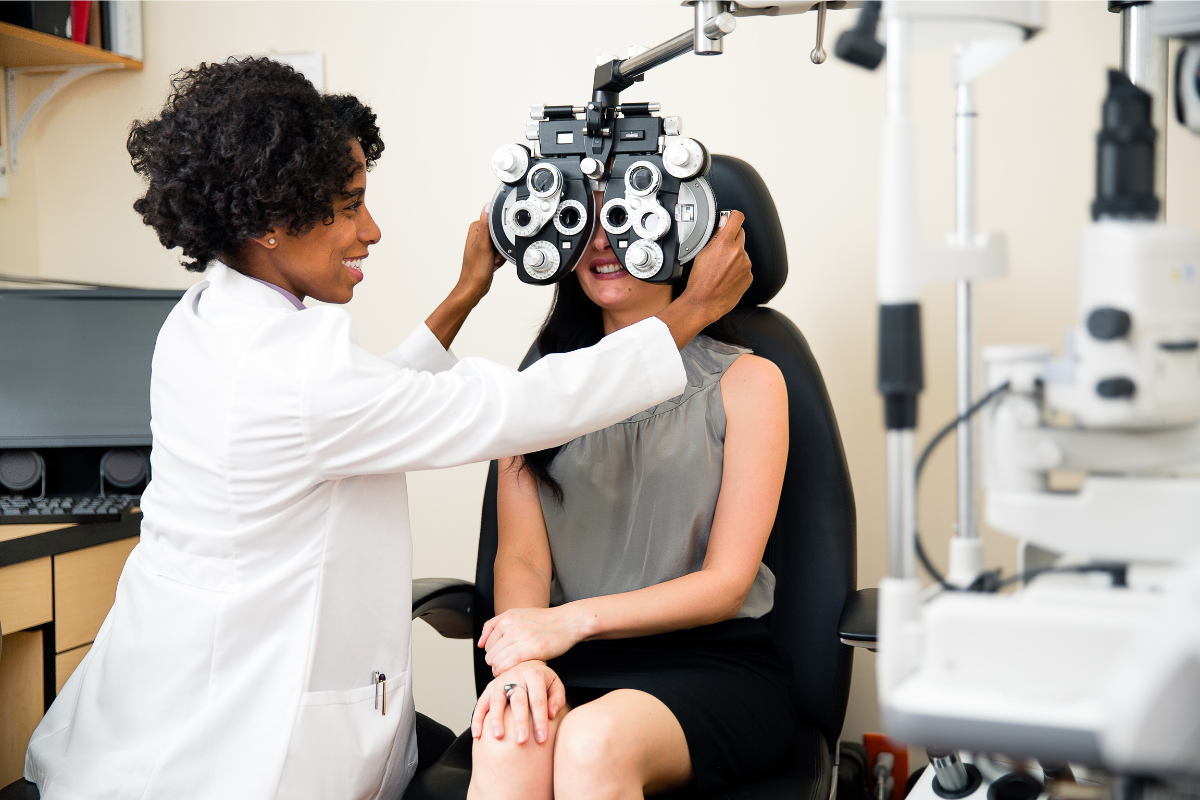
An Optometrist does more than determine whether someone needs stronger lenses, because a thorough examination combines symptoms, visual function, health history, and ocular findings to identify what requires correction, monitoring, or additional care.
This distinction matters because clear vision is not a complete measure of eye health. A person may read the smallest line on a chart while experiencing early changes that do not yet affect central vision. Someone else may have noticeable blur caused by an uncomplicated refractive error rather than disease.
Evidence-based eye care therefore depends on risk assessment. Age, family history, medications, chronic conditions, contact lens use, previous findings, and new symptoms all influence which tests are appropriate and how frequently a person should be evaluated.
A vision screening is designed to identify people who may need further evaluation. It may test visual acuity or use an instrument to look for possible refractive problems. Screening can be useful in schools, primary-care offices, workplaces, and community programs, but it does not establish that every aspect of the eyes is healthy.
A comprehensive examination gathers substantially more information. Depending on the patient, it may evaluate:
The American Optometric Association explains that comprehensive examinations assess both vision and eye health. A screening result should therefore be understood as one piece of information, not a substitute for individualized clinical evaluation.
People often ask how frequently they should have their eyes examined. There is no single interval that is appropriate for every person throughout life.
A healthy adult with stable vision and no known risk factors may have different needs from someone with diabetes, a strong family history of glaucoma, rapidly changing vision, or a condition already being monitored. A clinician may also recommend a shorter interval after identifying an uncertain finding or beginning a new treatment.
Factors that can influence timing include:
The practical question is not simply, “Has one year passed?” It is, “Has anything changed that affects my level of risk?” Patients should ask why a particular follow-up interval is recommended and what the clinician plans to reassess.
Dilating drops temporarily widen the pupils, allowing the doctor to examine more of the eye’s interior. This can support evaluation of the retina, optic nerve, blood vessels, and other structures that may be difficult to inspect through an undilated pupil.
The National Eye Institute describes the purpose and components of a dilated eye examination, including its role in checking for glaucoma, diabetic retinopathy, and age-related macular degeneration.
Retinal photography and other imaging technologies can provide useful documentation, but patients should not automatically assume that an image replaces dilation. The procedures collect related but different information. Whether imaging, dilation, or both are appropriate depends on symptoms, history, risk factors, and findings from the rest of the examination.
Dilating drops can cause temporary light sensitivity and blurred near vision. Patients should ask how long these effects are expected to last and whether they should arrange transportation based on their individual response and planned activities.
Children may not recognize that their vision differs from someone else’s. They can adapt to blur, rely more heavily on one eye, sit closer to objects, or avoid visually demanding tasks without explaining why.
The U.S. Preventive Services Task Force recommends vision screening at least once between ages three and five to detect amblyopia or its risk factors. A child who does not pass a screening should receive the recommended follow-up rather than waiting to see whether the issue becomes more obvious.
A comprehensive pediatric examination may be appropriate when parents, teachers, or healthcare professionals notice concerns such as:
Myopia deserves particular attention because it often begins during childhood and may progress as the eyes grow. The National Eye Institute’s overview of myopia explains its causes, symptoms, diagnosis, and available approaches to correction and control.
An eye examination should not be separated from the rest of a person’s health history. Diabetes, blood-pressure changes, autoimmune disease, medications, pregnancy, previous surgery, and family history may influence the examination plan or interpretation of a finding.
Diabetes is a clear example. Elevated blood glucose can damage retinal blood vessels, and early diabetic retinopathy may not produce noticeable symptoms. The Centers for Disease Control and Prevention emphasizes regular comprehensive and dilated eye care for people with diabetes.
Patients can improve the quality of an examination by bringing:
This context helps a clinician distinguish an isolated measurement from a pattern that deserves further investigation.
Dry eye is often discussed as though it were one uniform condition. In reality, symptoms may involve tear production, evaporation, eyelid function, inflammation, environmental exposure, medications, or several factors together.
The National Eye Institute notes that dry eye can cause burning, scratchiness, redness, light sensitivity, and blurry vision. Similar symptoms can occur with other conditions, so persistent discomfort should not be managed indefinitely through trial-and-error product purchases.
Before an evaluation, it can be helpful to record when symptoms occur, how long screen sessions last, whether contact lenses are involved, and which products have already been tried. That information can make the clinical discussion more specific.
A contact lens prescription includes more than corrective power. Lens material, diameter, curvature, replacement schedule, movement, coverage, and interaction with the ocular surface can all affect comfort and safety.
The U.S. Food and Drug Administration classifies contact lenses as medical devices. Even decorative lenses require a prescription and proper fitting.
Contact lens wearers should follow their prescribed replacement schedule, keep lenses away from nonsterile water, use recommended cleaning products, and avoid topping off old solution. A lens wearer who develops pain, redness, discharge, light sensitivity, or an unexpected change in vision should remove the lenses and contact an eye-care professional promptly.
Preventive examinations are valuable, but they are not the correct response to every problem. Sudden vision loss, significant eye injury, chemical exposure, severe pain, or a new curtain-like shadow in the visual field may require urgent assessment.
A sudden increase in flashes or floaters can also warrant prompt attention. The American Academy of Ophthalmology explains the warning signs associated with a torn or detached retina.
Patients should contact an eye-care office and describe the symptom directly instead of selecting an ordinary examination category online. If the office is unavailable or advises emergency evaluation, delaying care until a more convenient time may increase risk.
Located in Arlington’s Ballston neighborhood, Nova Optique & Eyecare combines routine vision care with medical and specialty services. Its published offerings include annual, pediatric, and contact lens examinations, diabetic eye exams, urgent eye care, dry-eye treatment, myopia management, and evaluation of conditions such as glaucoma, cataracts, and macular degeneration.
This range supports a risk-based model because patients do not all enter the practice with the same objective. One person may need an updated prescription, another may require monitoring for a medical condition, and a parent may be concerned about a child’s changing vision. The appropriate examination begins with identifying that purpose and then adapting the evaluation to the individual.
The strongest preventive eye-care plan is neither automatic nor identical for everyone. It combines appropriate screening, comprehensive evaluation, relevant medical history, careful interpretation, and a clear follow-up plan. When patients understand how their individual risks shape the examination, routine eye care becomes a more useful tool for protecting both sight and long-term eye health.