Why a Contact Lens Prescription Is More Than a Lens Power
Why a Contact Lens Prescription Is More Than a Lens Power Effective contact lens exams determine not only what optical correction is needed, but also…

Effective contact lens exams determine not only what optical correction is needed, but also whether a particular lens design can sit, move, and perform safely on an individual eye.
This distinction matters because contact lenses are medical devices worn directly on the cornea. Two products displaying the same power can differ in material, geometry, diameter, replacement schedule, and behavior on the eye. A successful prescription is therefore closer to a fitted system than a simple number.
The system has several interacting parts: the wearer’s prescription, corneal shape, tear film, eyelids, visual tasks, handling habits, and the physical properties of the lens. The purpose of an exam is to evaluate those variables, select a reasonable option, and confirm its performance rather than assuming that clear vision alone proves a good fit.
Eyeglass lenses sit in front of the eyes. Contacts rest on the tear film over the cornea, so their position and movement become part of the optical result. The prescription may need to account for this difference, especially at higher powers.
The U.S. Food and Drug Administration’s contact lens prescription guidance lists information such as power, manufacturer or material, base curve, diameter, issue date, and expiration date. These fields show why a contact lens prescription is product-specific.
Switching to another brand without professional approval is not necessarily an equivalent substitution. Even when the printed power matches, the new lens may interact differently with the cornea and eyelids.
A contact lens evaluation generally begins with a broader eye examination. The clinician needs to understand visual correction, eye health, medications, symptoms, prior lens experience, and the reason the patient wants contacts.
Useful history includes:
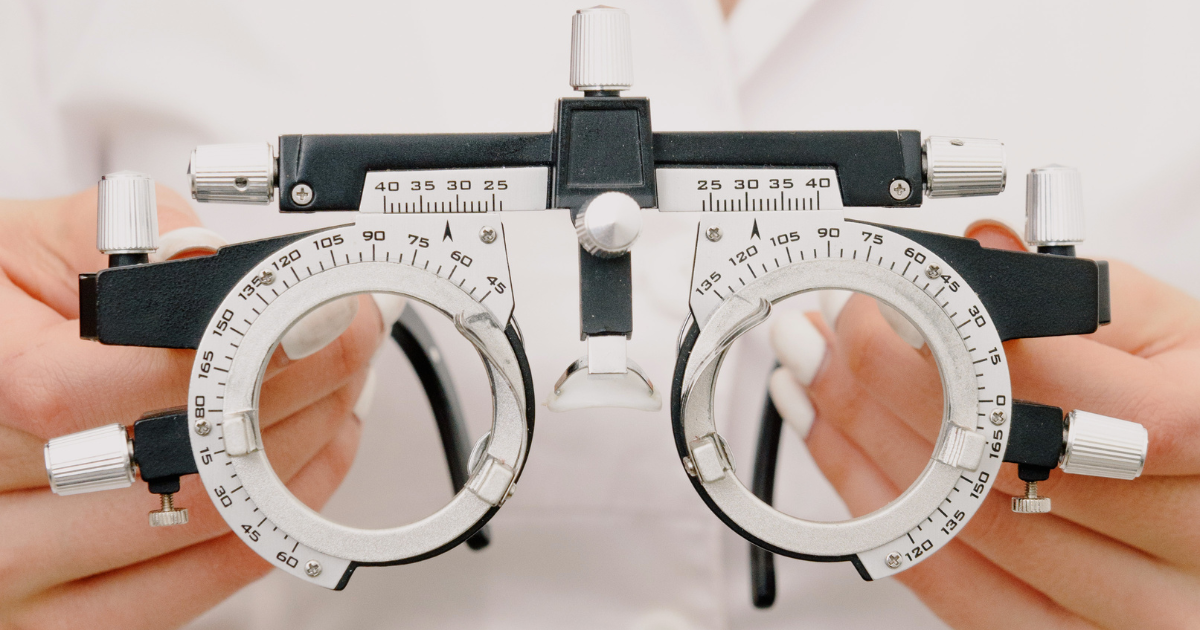
Refraction determines the correction needed for myopia, hyperopia, astigmatism, or presbyopia. It provides a starting point, but it does not select the complete lens.
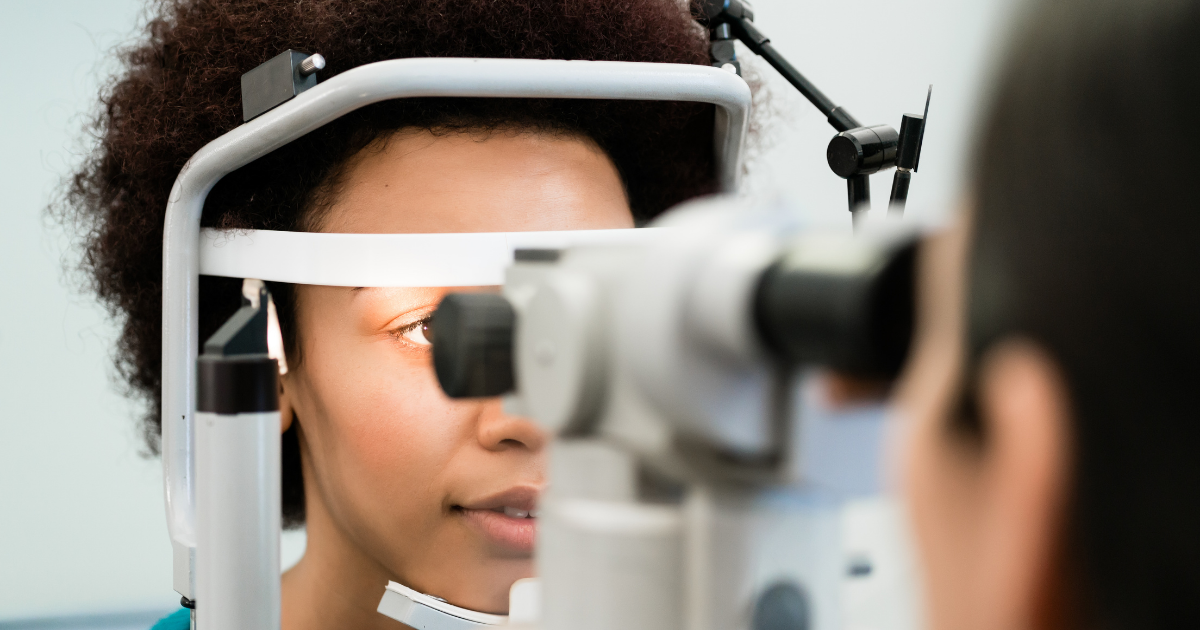
Measurements of corneal curvature and visible eye dimensions can help narrow suitable lens parameters. The clinician may also evaluate the eyelids, tear film, cornea, and conjunctiva for findings that could affect comfort or safety.
Dryness is not a single yes-or-no variable. Symptoms can change with screen use, airflow, season, medications, and wearing time. A lens that feels comfortable for ten minutes in an exam room still needs to function during the patient’s normal day.
Measurements allow the clinician to choose a promising starting lens. A trial lens then shows how that prediction performs on the actual eye.
The National Eye Institute explains that an eye doctor may place trial lenses on the eyes to assess fit and test vision while the lenses are being worn.
Evaluation may consider:
A change in brand, material, or design may require another evaluation because it changes the fitted device. This is clinical verification, not needless product loyalty.
Contact lens categories solve different problems. No category is universally superior.
Toric lenses contain correction in specific meridians. Their orientation on the eye influences vision, so the examiner evaluates rotation and stability rather than relying on power alone.
Multifocal designs distribute optical information for near, intermediate, and distance tasks. The fitting process may involve tradeoffs among reading detail, computer range, night vision, and distance clarity. Understanding the patient’s priorities helps guide those adjustments.
Standard soft lenses do not answer every visual need. Gas-permeable, hybrid, scleral, or other specialty designs may be considered for certain corneal shapes or conditions. These evaluations often require additional measurements, trial lenses, and refinement.
The American Optometric Association’s contact lens clinical resources provide professional guidance covering contact lens care and fitting considerations across different patient needs.
Daily disposable, two-week, monthly, and other replacement schedules are not interchangeable labels. They determine whether a lens is discarded after use or cleaned, disinfected, stored, and reused.
The most appropriate option depends on clinical findings and behavior. A reusable lens requires reliable solution and case care. A daily disposable removes those particular steps but still requires clean hands, proper wear, and disposal after the intended use.
A practical plan should answer:
A clinically suitable lens can still become unsafe when worn or stored incorrectly. The Centers for Disease Control and Prevention recommends washing and completely drying hands before handling lenses, avoiding sleep in lenses unless directed, keeping contacts away from water, and using fresh disinfecting solution rather than mixing old and new solution.
The FDA’s contact lens care guidance also advises removing lenses and calling an eye doctor when redness, pain, itching, excessive tearing, or a vision change occurs.
Useful safeguards include:
Initial comfort is valuable, but it does not reveal everything. Once a lens has been worn in normal environments, the patient can report when blur or dryness begins, whether vision fluctuates, and which tasks remain difficult.
A follow-up evaluation can compare those observations with the lens position, movement, visual acuity, and ocular-surface findings. This creates a feedback loop: select, wear, observe, evaluate, and refine.
Patients can improve that process by recording the lens brand, average wearing time, cleaning products, replacement date, and timing of symptoms. “My eyes get dry after six hours at a monitor” is more actionable than “contacts never work for me.”
The Federal Trade Commission’s Contact Lens Rule requires prescribers to provide a copy of the contact lens prescription when the fitting is complete. Sellers must obtain or verify prescription information before supplying lenses.
This gives patients purchasing flexibility, but it does not make contact lenses generic merchandise. Even decorative lenses require professional measurement and a prescription. The FDA warns that poorly fitted decorative lenses can cause corneal scratches, infection, reduced vision, and other serious damage.
Northern VA Doctors of Optometry states that its optometrists evaluate patients before recommending conventional or specialized contact lenses. Its current service page lists daily, two-week, monthly, and quarterly replacement options, along with toric, multifocal, gas-permeable, hybrid, specialty, and Ortho-K lenses.
The practice also identifies specialty options for keratoconus and irregularly shaped corneas. With locations in Alexandria, Arlington, Berryville, Falls Church, and Reston, NOVA presents contact lens fitting as part of a broader eye-care system rather than a product-only transaction.
A contact lens exam is successful when it produces more than clear letters on a chart. It should connect a verified lens fit, stable vision, healthy tissue, manageable care requirements, and informed patient behavior. That complete system is what turns a small optical device into safe, practical vision correction.