Growing Eyes: Children’s Eye Exams in San Juan Capistrano
Children’s eye exams in San Juan Capistrano, CA can evaluate developing visual skills that a brief screening or a child’s ability to read an eye…

A Hair salon can support informed beauty decisions when its recommendations distinguish appearance, hair-fiber condition, scalp comfort, and medical concerns.
This distinction matters because the phrase “healthy hair” can describe several different outcomes. It may refer to smoother-looking strands, less breakage, a comfortable scalp, or normal hair growth. These outcomes are related, but they are not interchangeable.
Consumers do not need a scientific background to evaluate salon services. They need clear explanations, realistic expectations, product-specific safety information, and measurable ways to judge whether a service suits their needs.
Hair and scalp care becomes easier to understand when the discussion is divided into three categories.
The hair visible above the scalp is primarily a keratinized fiber. A scientific review indexed by the National Library of Medicine explains the structure and cosmetic treatment of the hair shaft, including how cleansing, conditioning, coloring, straightening, and other processes alter its properties.
Products can coat the fiber, reduce friction, improve manageability, and temporarily change how damaged hair looks or feels. That value is genuine, but it should not be confused with biologically healing a nonliving hair shaft.
An evidence-informed consultation gathers information before recommending a service. The goal is not to make every visit clinical. It is to identify variables that could affect the result, comfort, maintenance, or risk.
Useful information includes:
Pictures can communicate a visual goal, but they cannot reveal the model’s starting color, hair history, density, lighting, editing, or maintenance routine. A stylist must translate the image into decisions that apply to the individual.
Responsible recommendations acknowledge variables. A stylist may explain that a test strand is encouraging without promising that every section will lift identically. An extension method may appear appropriate while still requiring adjustments as the natural hair grows.
Absolute promises should invite questions. Hair condition and cosmetic response cannot always be predicted perfectly, even when accepted procedures are followed carefully.
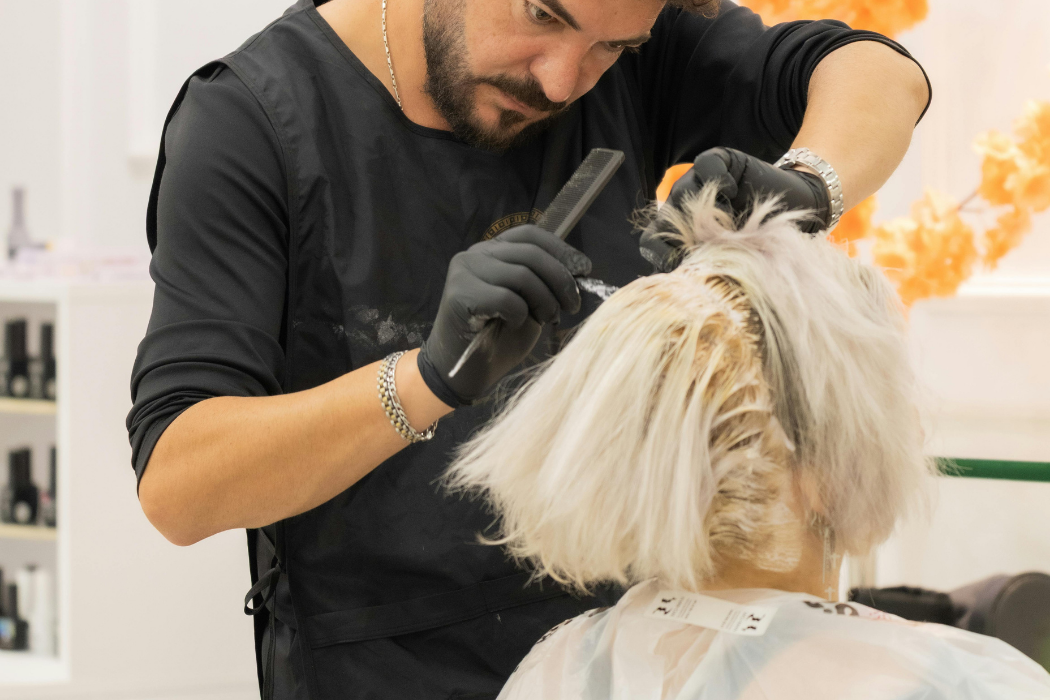
Hair color can alter tone, depth, brightness, and gray coverage, but the chemical history of the strands affects what can be accomplished responsibly.
The American Academy of Dermatology identifies coloring, perming, excessive heat, rough handling, and tight styling among practices that can contribute to hair damage. Risk is cumulative, so a color service should not be evaluated in isolation from the client’s broader routine.
Substantial lightening may require a gradual plan when the hair has already been processed. A slower transformation is not necessarily a compromise in skill. It may reflect a deliberate decision to limit avoidable breakage.
Allergic reactions require a different kind of caution. The U.S. Food and Drug Administration advises consumers to follow hair-dye directions and complete the instructed skin test before every use. Sensitivity can develop after previous uneventful exposure, and formulas can change.
Before color, clients should disclose earlier reactions and ask:
Words such as repair, restore, detoxify, balance, and strengthen can sound scientific while remaining difficult to measure. A useful treatment description identifies the concern, the expected cosmetic change, and the likely duration.
The Federal Trade Commission explains that health-related claims should be supported by competent and reliable scientific evidence. Although many salon claims are cosmetic rather than medical, the underlying consumer principle remains valuable: the strength of the evidence should match the strength of the promise.
For a conditioning or scalp service, ask:
A client can then judge the service by its intended outcome instead of relying on an appealing but undefined wellness term.
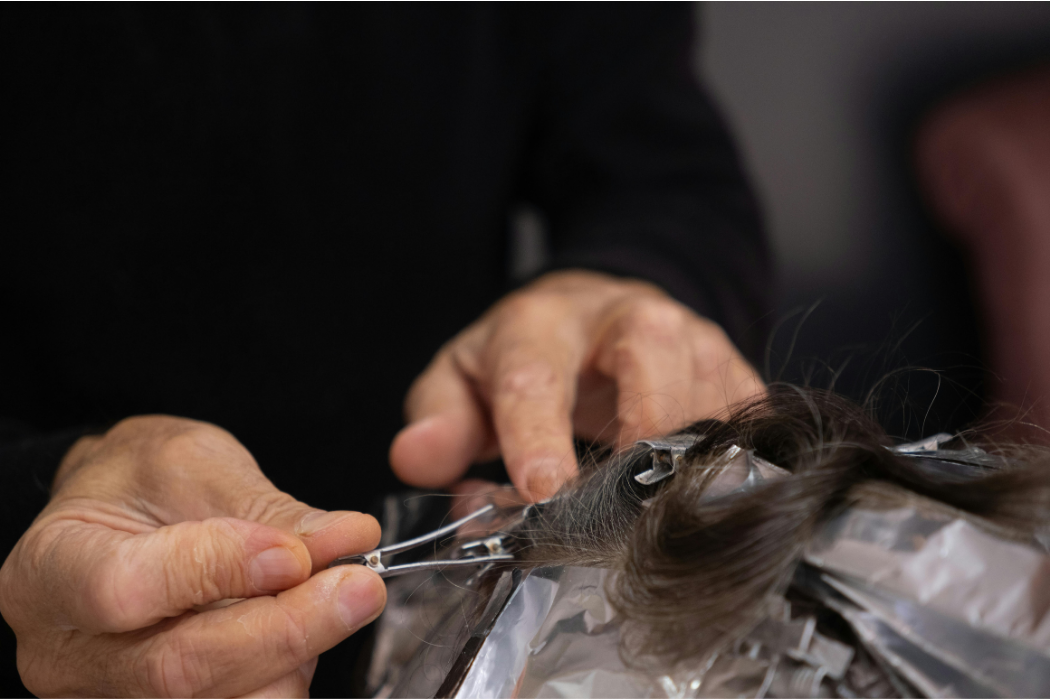
Extensions can add length, fullness, or color without requiring the natural hair to provide all three. Their quality, however, involves more than an attractive first-day photograph.
Method selection should consider density, texture, growth patterns, placement, attachment weight, lifestyle, and maintenance. An installation that looks seamless but causes continuing pain is not a successful result.
The American Academy of Dermatology warns that tightly installed weaves and extensions can contribute to breakage and traction-related hair loss. Persistent headaches, soreness, bumps, or pulling should be reported rather than accepted as normal.
Before installation, clarify:
Keratin treatment and smoothing service are broad labels. Formulas, application procedures, heat requirements, expected effects, and safety considerations can differ.
The Occupational Safety and Health Administration reports that certain hair-smoothing products may contain or release formaldehyde. Its guidance emphasizes labels, safety data, ventilation, training, and protective practices.
Consumers can ask for the exact product name and what it is designed to do. They should also ask how it interacts with existing color, whether specific aftercare is required, and how long the cosmetic effect ordinarily lasts.
Terms such as natural, clean, or formaldehyde-free should not replace ingredient-specific information. Eye irritation, breathing discomfort, burning, or another unexpected reaction should be communicated immediately.
A salon scalp treatment may cleanse buildup, condition the scalp and hair, or support a more comfortable care routine. These are legitimate cosmetic goals. They are not substitutes for medical diagnosis.
The American Academy of Dermatology lists warning signs associated with hair loss, including sudden bald patches, clumps of shedding, intense itching, burning, tenderness, sores, and inflamed or scaly areas.
A qualified healthcare professional should evaluate sudden, painful, persistent, or unexplained symptoms. A stylist can notice a visible change and recommend pausing a service, but determining the medical cause belongs to an appropriate clinician.
Beauty and Soul in Sturtevant, Wisconsin, presents consultation as the starting point for customized hair services. Its published menu includes haircuts, dimensional color, blonding, color maintenance, transformations, corrections, perms, keratin treatments, extensions, and tiered scalp treatments.
The salon explains that color pricing is determined during consultation. It also publishes starting prices for haircuts, texture services, and scalp treatments, while noting that its scalp options include take-home shampoo and conditioner selected for the guest’s needs.
Its extension process considers density, texture, growth patterns, lifestyle, and desired results before recommending hand-tied or tape-in methods. The business states that it uses AQUA and Easi Hair Pro extension hair and provides guidance about reapplication and home maintenance.
Beauty and Soul also identifies itself as a L’ANZA Healing Center and describes its approach as centered on hair integrity, education, communication, and ongoing professional learning. These details give prospective clients specific subjects to discuss rather than requiring them to rely on a general promise of healthy hair.
Wisconsin consumers can review training and credential information through the state’s Department of Safety and Professional Services cosmetologist resource. Current services, prices, product suitability, and maintenance requirements should be confirmed directly with the salon.
Evidence-informed salon care does not eliminate creativity. It gives creativity a stronger foundation by connecting recommendations to the individual’s hair history, goals, comfort, and daily routine.
The most trustworthy providers do not need to promise biological transformation. They explain what a service can change, what uncertainty remains, how risks are managed, and what the client must do afterward. With those details, consumers can make beauty decisions that are both inspiring and well informed.